
This guide compares UPS vs portable power stations for apartments, focusing on real-world performance during power outages rather than technical specs.
Power outages in apartments present a unique challenge. Unlike houses, apartment residents must deal with strict noise rules, indoor safety concerns, limited space, and building regulations that restrict many traditional backup power options. Choosing the right solution is therefore more complex than simply buying the most powerful system available.
Two of the most common options for apartment backup power are UPS systems and portable power stations. While both rely on batteries and are safe for indoor use, they serve very different purposes and perform differently during real-world outages. Understanding how each system works—and where each one falls short—is essential for choosing a solution that actually keeps your apartment powered when the grid goes down.
In this guide, we compare UPS units and portable power stations specifically for apartment use, focusing on practicality, safety, runtime, and real outage scenarios rather than technical specs alone. The goal is to help you decide which option truly works for your situation—and when combining both makes the most sense.
If you’re still evaluating all apartment-safe options before choosing between these two systems, our complete guide to backup power solutions for apartments explains how portable power stations, UPS units, solar options, and generators compare in real apartment scenarios.
Common Mistakes Apartment Residents Make When Choosing Backup Power
Many apartment residents make avoidable mistakes when selecting a backup power solution. These errors often lead to wasted money, insufficient power during outages, or systems that don’t fit apartment living rules.
Understanding these common pitfalls helps you choose a solution that actually works in real blackout scenarios—not just on paper.
Buying More Power Than You Actually Need
One of the most common mistakes is assuming that “more power is always better.” Many people overspend on high-capacity systems designed for houses, even though apartments typically require far less energy during outages.
In reality, most apartment outages only require enough power to run:
- Internet equipment
- Phones and laptops
- Lighting
- Possibly a refrigerator for limited periods
Oversizing your system increases cost, charging time, and storage space without delivering proportional benefits.
To avoid this mistake, it’s important to understand how many watts an apartment needs during a power outage, based on real devices and realistic usage rather than assumptions. Choosing a power station that matches your actual usage leads to better efficiency and usability.
Ignoring Critical Devices During Planning
Another frequent mistake is focusing on total wattage while overlooking which devices truly matter during a blackout. Not all appliances are equally important.
For most apartments, critical devices include:
- Wi-Fi routers and modems
- Phones and communication devices
- Work-from-home equipment
- Medical or health-related electronics (if applicable)
Failing to prioritize these essentials can result in running out of power when it’s needed most. Planning around critical loads ensures your backup power delivers real value during outages.
Relying on a Single Backup Power Solution
Many apartment residents rely on just one backup power device, assuming it will handle every scenario. This approach often falls short.
A more reliable strategy is layering solutions:
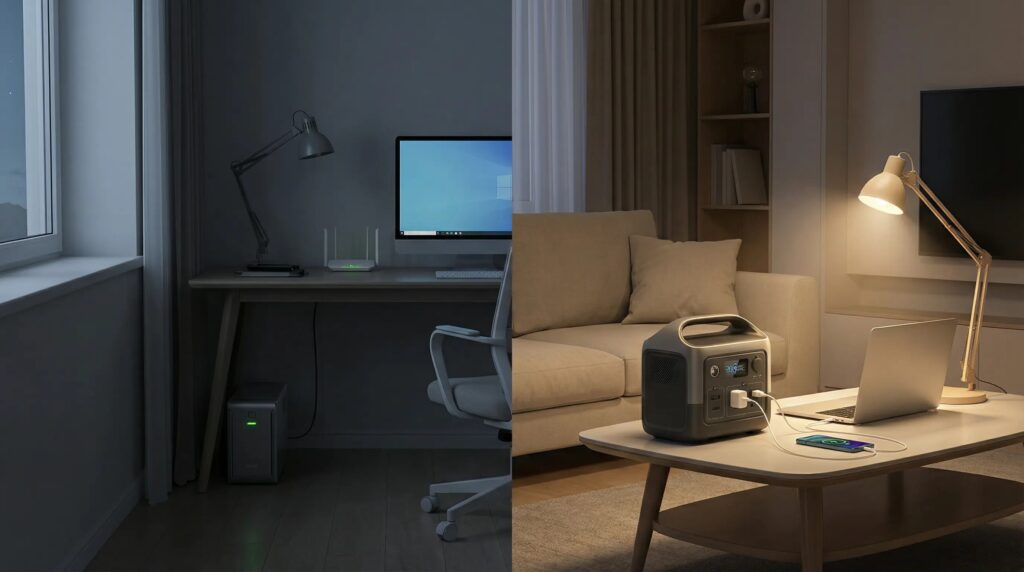
- A small UPS for instant protection of routers or computers
- A portable power station for extended runtime
This combination prevents sudden shutdowns while providing sustained power during longer outages. Relying on a single solution can leave gaps in coverage, especially when outages last longer than expected.
How to Match a Backup Power Solution to Apartment Living
Apartment living comes with unique constraints that don’t apply to houses. Noise limits, safety rules, space limitations, and building regulations all influence which backup power options are practical.
Choosing the right system means aligning power capacity with how apartments are actually used—not theoretical maximums.
Indoor Safety and Noise Considerations
In apartments, indoor safety is non-negotiable. Any backup power solution must be:
- Emission-free
- Quiet
- Safe to operate in enclosed spaces
Battery-based systems such as portable power stations and UPS units meet these requirements, while fuel-powered generators generally do not. Noise complaints, ventilation risks, and building restrictions make generators impractical for most apartment settings.
Understanding how much power your essential devices consume is critical when planning apartment backup power. According to the U.S. Department of Energy, estimating appliance energy use helps households avoid oversizing systems and wasting capacity during outages.
Space and Storage Limitations
Apartments typically have limited storage space, which makes size and portability important factors. Large, bulky systems may be difficult to store or move when not in use.
Compact backup power solutions that can be stored in closets or under desks are far more practical. Ease of storage directly affects whether a system will actually be used during outages.
Charging Flexibility During Extended Outages
Charging options matter more than many people realize. A backup power solution that can only be charged from wall outlets may become useless during long outages.
Systems that support:
- Wall charging
- Vehicle charging
- Optional solar charging
offer greater resilience. Charging flexibility ensures your system remains usable even when grid power is unavailable for extended periods.
When Portable Power Stations Make the Most Sense for Apartments
For many apartment residents, portable power stations offer the best balance between safety, flexibility, and capacity.
They are particularly effective when:
- Outages last several hours
- Quiet operation is required
- Indoor use is necessary
- Installation is not allowed
Because they don’t require fuel, ventilation, or permanent installation, portable power stations align well with apartment living constraints.
When a UPS Is Not Enough for Apartment Power Outages
While UPS systems are excellent for preventing sudden shutdowns, they are not designed for long-duration outages.
A UPS works best when:
- You need instant power with zero interruption
- Runtime requirements are short
- The goal is protecting data and equipment
However, relying solely on a UPS during longer outages can lead to power loss within minutes. This is why many apartment residents combine a UPS with a higher-capacity backup system.
Final Takeaway for Apartment Backup Power Planning
Choosing the right backup power solution for an apartment is not about buying the biggest or most expensive system. It’s about understanding your real needs, apartment constraints, and outage patterns.
If you want a broader breakdown of all apartment-safe options—including generators, solar backup, UPS systems, and battery power stations—our complete guide to backup power solutions for apartments explains how each system fits different living situations.
By avoiding common mistakes and matching the right solution to apartment living, you can stay connected, productive, and safe during power outages—without unnecessary cost or complexity.