
Power outages in apartment buildings create challenges that don’t exist in houses. Limited space, strict noise rules, indoor safety requirements, and building regulations all restrict which backup power solutions are actually usable.
Building an effective apartment backup power setup is not about installing the most powerful system available. It’s about choosing safe, quiet, and practical solutions that work within apartment constraints while keeping essential devices running during blackouts.
This guide explains how to build a realistic and compliant apartment backup power setup, based on real outage scenarios—not theory.
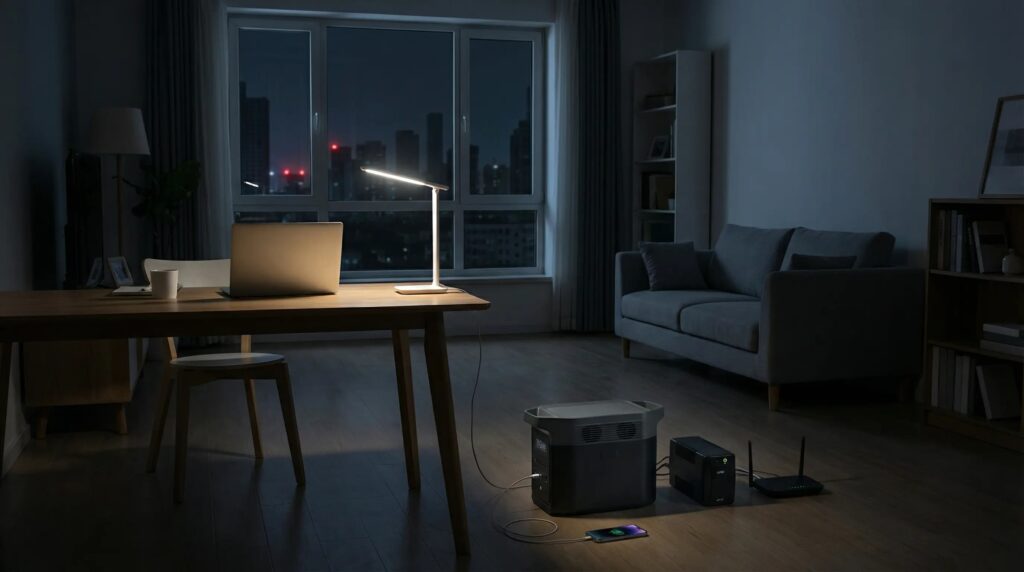
Understanding Apartment Backup Power Constraints
Apartment residents face limitations that directly affect backup power choices. These constraints must be understood before buying any equipment.
Common apartment constraints include:
- Fuel-powered generators are usually prohibited
- Noise restrictions enforced by building management
- Indoor air quality and fire safety regulations
- Limited storage space
- No permission for permanent electrical modifications
Ignoring these constraints often leads to wasted money on systems that cannot be used safely or legally.
Identify Your Essential Power Needs First
One of the biggest mistakes apartment residents make is planning for everything instead of focusing on what truly matters during an outage.
What Devices Matter Most During an Apartment Blackout
In most apartment outages, essential power usually means:
- Internet modem and Wi-Fi router
- Laptop or work equipment
- Phones and communication devices
- Lighting in key areas
- Medical or health-related devices (if applicable)
High-power appliances such as air conditioners, electric heaters, or ovens typically exceed what apartment-safe systems can handle efficiently.
Focusing on essentials keeps your system affordable, efficient, and usable.
Choosing the Right Backup Power Setup for Apartments
Backup power systems are designed for different purposes. In apartments, the goal is safe indoor operation with flexible runtime, not whole-home power.
Apartment backup power generally falls into two categories:
- Short-term protection (seconds to minutes)
- Extended backup power (hours)
Understanding how these systems work together is key to building a reliable setup.
Layering Backup Power for Better Reliability
Relying on a single device often leaves gaps during outages. A layered approach delivers far better results in apartments.
Why a Layered Setup Works Best
A practical apartment backup power setup often includes:
- A UPS to prevent sudden shutdowns of critical electronics
- A portable power station to provide extended runtime
This combination ensures both instant protection and sustained power—without violating apartment safety rules.
Indoor Safety and Noise Compliance
Indoor safety is non-negotiable in apartment living.
Apartment-safe backup power systems must be:
- Emission-free
- Quiet during operation
- Safe for enclosed spaces
- Free from fuel storage risks
Battery-based systems meet these requirements, and among them, portable power stations for apartments offer the safest and most practical option for indoor backup power. Fuel-powered generators do not—even “quiet” models produce exhaust gases and are unsafe indoors or on balconies.
Storage, Space, and Portability Considerations
Space limitations strongly influence whether a backup power system is actually usable.
Large, bulky systems are difficult to store and move. Compact and portable devices are far more practical for apartments, especially when stored under desks, in closets, or near workstations.
Portability also matters when charging options are limited.
Planning for Charging During Extended Outages
A backup power setup is only effective if it can be recharged.
Charging Options That Matter for Apartments
The most resilient systems support:
- Wall outlet charging
- Vehicle charging
- Optional solar charging (where allowed)
Charging flexibility becomes critical during long outages when grid power is unavailable.
To avoid running out of power unexpectedly, it’s essential to understand how much power an apartment actually needs.
Common Apartment Backup Power Mistakes to Avoid
Many apartment residents reduce their backup power effectiveness by:
- Buying systems designed for houses
- Ignoring indoor safety limitations
- Planning only for wattage instead of runtime
- Relying on a single backup device
Avoiding these mistakes leads to safer operation, lower costs, and better reliability. Understanding how much power an apartment actually needs during a blackout helps prevent oversizing systems and choosing unsafe or impractical solutions.
Final Thoughts on Apartment Backup Power Planning
Building a safe apartment backup power setup is not about maximum output—it’s about matching realistic power needs with apartment-safe solutions.
By respecting building rules, prioritizing essential devices, and layering battery-based systems, apartment residents can stay connected and productive during outages without unnecessary risk or expense.
A smart setup delivers reliability, compliance, and peace of mind—exactly what apartment living demands in 2026 and beyond.