
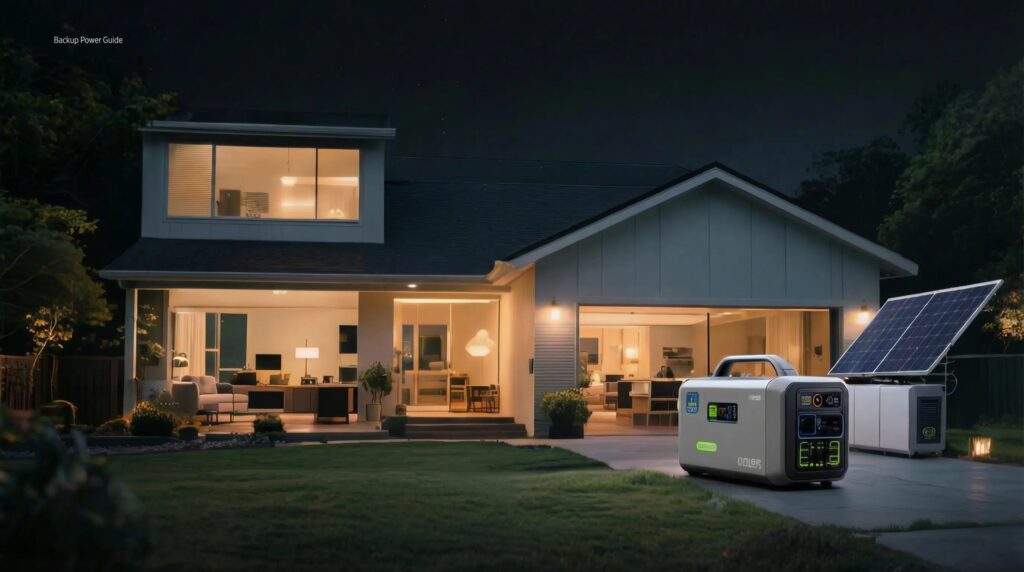
In this guide, you’ll learn how different backup power solutions work, how to choose the right system for your home, and how to prepare effectively for power outages in 2026.
Backup power solutions are essential for modern homes in 2026 as power outages become more frequent and unpredictable. Choosing the right backup power solution helps protect your home, appliances, and daily activities during unexpected electricity failures.
Choosing the right backup power solution for your home is no longer optional—it’s essential. In this guide, we compare the best backup power solutions for home power outages in 2026, helping you understand which option fits your home, your budget, and your energy needs.
Why Home Backup Power Is Essential in 2026
In 2026, home backup power is no longer optional—it has become essential for modern households. Power outages are happening more frequently due to extreme weather events, aging power grids, and rising electricity demand. Even short outages can disrupt daily life, affecting food storage, home security systems, internet connectivity, and remote work. For families with children, elderly members, or anyone relying on essential electrical devices, losing power is more than an inconvenience—it can be a serious risk. A reliable home backup power solution ensures continuity, comfort, and safety, while protecting your home from unexpected disruptions and costly damages.
Types of Backup Power Solutions for Homes in 2026
There are several types of backup power solutions for homes, and choosing the right one depends on your energy needs, budget, and how long you want to stay powered during an outage. Some systems are designed to keep only essential devices running, while others can power an entire home for hours or even days. In this section, we’ll break down the most common home backup power options, explaining how each system works, what it’s best used for, and who it’s ideal for. Understanding these differences will help you avoid overspending and ensure you select a solution that truly fits your home and lifestyle.
Portable Power Stations (Battery Backup Systems)
Portable power stations are one of the most popular backup power solutions for homes in 2026, especially for short to medium power outages. These battery-based systems store electricity and deliver clean, silent power without fuel, fumes, or complex installation. They are ideal for keeping essential devices running, such as Wi-Fi routers, laptops, smartphones, medical equipment, lights, and small kitchen appliances.
Modern portable power stations have evolved significantly, offering higher capacities, faster charging, and multiple output options including AC outlets, USB ports, and DC connections. Many models can be recharged using wall outlets, car chargers, or solar panels, making them highly versatile for both emergency use and everyday situations like remote work or outdoor activities.
For homeowners who want a safe, low-maintenance, and eco-friendly backup power option, portable power stations provide an excellent balance between convenience and reliability. While they are not designed to power an entire house for long periods, they are perfect for maintaining comfort and productivity during unexpected outages.
Home Generators (Gas / Diesel / Propane)
Home generators are one of the most powerful and reliable backup power solutions for households that need continuous electricity during extended power outages. These systems operate using fuel sources such as gasoline, diesel, or propane and are capable of supplying electricity to multiple home circuits—or even the entire house—depending on their size and configuration.
Standby home generators are typically installed permanently outside the house and connected directly to the electrical panel. When a power outage occurs, they automatically turn on within seconds, ensuring uninterrupted power for critical systems such as refrigerators, heating and cooling units, water pumps, security systems, and essential appliances. This makes them especially valuable in regions with frequent or long-lasting outages.
While home generators offer high power output and reliability, they also require regular maintenance, proper ventilation, and ongoing fuel availability. Fuel costs, noise levels, and environmental impact are important factors to consider before choosing this solution. For homeowners who prioritize full-home coverage and long-duration backup power, gas, diesel, or propane generators remain a strong and proven option in 2026.
Solar Backup Systems
Solar backup systems provide a clean and sustainable way to keep your home powered during electricity outages by harnessing energy from the sun. These systems typically consist of solar panels, a charge controller, a battery storage unit, and an inverter that converts stored energy into usable household electricity.
During normal days, solar panels generate electricity and charge the batteries. When a power outage occurs, the system automatically supplies stored energy to essential home circuits such as lighting, internet routers, refrigerators, and medical or remote-work equipment. This makes solar backup systems especially attractive for homeowners seeking energy independence and long-term savings.
One of the biggest advantages of solar backup systems is their ability to function without fuel, noise, or emissions. Over time, they can significantly reduce electricity bills while providing reliable backup power. However, initial installation costs can be higher than other solutions, and performance depends on sunlight availability and battery capacity.
In 2026, solar backup systems combined with high-capacity lithium batteries are becoming one of the most popular choices for homeowners who want a reliable, eco-friendly, and future-proof backup power solution.
UPS Systems
UPS systems (Uninterruptible Power Supply) are designed to provide instant, short-term backup power when electricity suddenly goes out. Unlike generators or solar systems, a UPS activates immediately—within milliseconds—making it ideal for protecting sensitive electronics such as computers, Wi-Fi routers, security systems, and medical devices.
A UPS system works by storing energy in an internal battery that continuously supplies power to connected devices when the main grid fails. This seamless transition prevents data loss, hardware damage, and internet interruptions, which is especially important for remote workers and home offices.
While UPS systems are not meant to power an entire home or last for many hours, they are extremely reliable for short outages and voltage fluctuations. Most UPS units can keep essential devices running for 15 minutes to several hours, depending on battery capacity and power consumption.
In 2026, UPS systems remain a critical backup solution for homes that rely heavily on uninterrupted internet, digital work, and electronic security—often used alongside generators or solar systems as part of a layered backup power strategy.
Comparison Table: Backup Power Solutions
| Backup Power Solution | Power Capacity | Runtime | Noise Level | Installation | Typical Cost |
|---|---|---|---|---|---|
| Portable Power Stations | Low to Medium | Several hours | Silent | Very easy | $$ |
| Home Generators (Gas / Diesel / Propane) | High | Several days | Loud | Professional required | $$$ |
| Solar Backup Systems | Medium to High | Hours to days | Silent | Professional required | $$$$ |
| UPS Systems | Very low | Minutes to few hours | Silent | Plug-and-play | $ |
How to Choose the Best Backup Power for Your Home
Choosing the best backup power solution for your home depends on how much electricity you need, how long outages typically last, and your living situation. Apartments and renters often benefit from portable power stations or UPS systems because they are easy to install, silent, and require no permanent modifications. These options are ideal for keeping essential devices like internet routers, laptops, and lights running.
For houses and families that experience longer outages, home generators or solar backup systems provide more reliable and extended power coverage. Generators are well suited for powering large appliances and multiple circuits, while solar backup systems are ideal for homeowners who want a quieter, fuel-free, and long-term energy solution. Budget is also a key factor—some systems require a higher upfront investment but offer lower operating costs over time.
Before making a decision, it’s important to calculate your essential power needs, consider noise and maintenance requirements, and think about whether you want backup power only during emergencies or as part of a long-term energy strategy. The right choice is the one that matches your home’s needs without unnecessary complexity or expense.
Common Mistakes to Avoid When Buying Backup Power
One of the most common mistakes homeowners make when buying backup power is choosing a system without accurately calculating their actual power needs. Oversizing a system can lead to unnecessary costs, while undersizing it may result in critical devices shutting down during an outage. Understanding both running watts and surge watts is essential to avoid this issue.
Another frequent mistake is focusing only on the purchase price and ignoring long-term costs such as fuel, maintenance, battery replacement, or efficiency losses. For example, generators may seem affordable upfront but can become expensive over time due to fuel consumption and servicing, while battery-based systems may require future battery upgrades.
Many buyers also overlook practical factors like noise levels, ventilation requirements, and installation complexity. Using a generator indoors, failing to plan proper airflow, or placing equipment in unsuitable locations can create safety risks. Taking the time to evaluate how and where a backup power system will be used helps prevent costly errors and ensures a safe, reliable solution.
Frequently Asked Questions (FAQ)
How many watts does a home need during a power outage?
The amount of power a home needs during an outage depends on which devices you want to run. Basic essentials such as lights, Wi-Fi routers, phones, and a refrigerator usually require between 1,000 and 3,000 watts. Homes that need to power heating, cooling, or multiple appliances may require significantly more capacity.
Is a solar backup system reliable during long power outages?
Yes, solar backup systems can be reliable during long outages if they are paired with sufficient battery storage. While solar panels generate energy only during daylight hours, stored battery power can be used at night or during cloudy conditions. System size and battery capacity are key factors in reliability.
What is the difference between a generator and a portable power station?
Generators use fuel such as gasoline, diesel, or propane to produce electricity and can power larger loads for longer periods. Portable power stations rely on batteries, operate silently, require no fuel, and are easier to use indoors, but they typically provide less total power and shorter runtime.
Can a UPS power my home during an outage?
A UPS is not designed to power an entire home. It is best used for short-term backup of sensitive electronics like computers, internet routers, security systems, and medical devices. For full-home backup, a generator or solar system is more suitable.
Which backup power solution is best for apartments or renters?
Portable power stations and UPS systems are usually the best options for apartments and rental properties. They require no permanent installation, produce no emissions, and are easy to store and transport.
Final Recommendation for 2026
Power outages are no longer rare or predictable, and in 2026, preparing your home for electricity disruptions is a smart and responsible decision. The right backup power solution is not about choosing the most expensive system, but about understanding your real needs and matching them with a reliable, safe, and practical option.
For many homes, a portable power station or a UPS system is enough to stay connected and protected during short outages. For households facing frequent or extended power cuts, home generators or solar backup systems with battery storage offer stronger and longer-lasting coverage. Each solution has its place, and the best choice depends on your home size, lifestyle, and how much independence you want from the grid.
The most resilient homes often rely on a layered backup strategy—combining more than one solution to handle both sudden interruptions and long outages. This approach maximizes reliability while avoiding unnecessary costs or complexity.
If you want to fully understand how backup power systems work, how to calculate your exact energy needs, and how to choose the most suitable solution with confidence, we recommend exploring our complete backup power guide. It provides a clear, step-by-step breakdown to help you make informed decisions and build a backup power setup that truly works for your home.
Frequently Asked Questions About Backup Power Solutions
What are the best backup power solutions for home use?
The best backup power solutions for home use depend on your energy needs and outage duration. Portable power stations are ideal for short outages, while generators and solar backup systems are better suited for long or frequent power interruptions.
How do I choose the right backup power solution in 2026?
To choose the right backup power solution in 2026, consider how long outages typically last in your area, which devices you need to power, and your budget. A combination of battery backup and generators often provides the most reliable protection.