
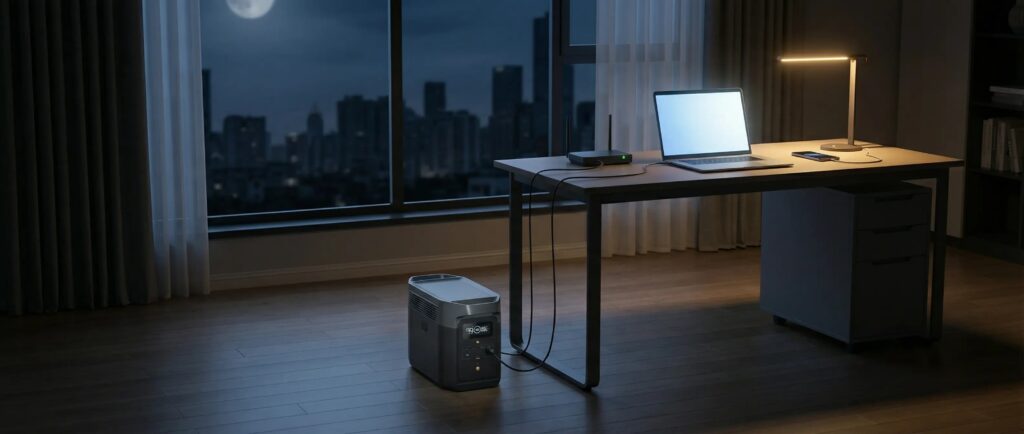
Backup power for remote work apartments is no longer a luxury—it has become a necessity. Power outages are more than a minor inconvenience for remote workers living in apartments. A sudden blackout can interrupt video calls, disconnect Wi-Fi, shut down computers, and put important deadlines at risk—often within minutes. When your work depends on staying online, even a short power interruption can have real professional consequences.
Unlike houses, apartments come with strict limitations that make backup power planning more complex. Noise restrictions, indoor safety concerns, limited space, and building regulations rule out many traditional solutions. For remote workers, the challenge is finding a backup power setup that keeps essential devices running quietly and safely—without violating apartment rules or relying on unreliable workarounds.
Why Power Outages Are a Serious Problem for Remote Workers in Apartments
Power outages affect remote workers differently than casual home users. Missed meetings, dropped calls, and unsent work can impact productivity and professional reliability. In apartments, these risks are amplified by the lack of permanent backup options and the need for indoor-safe solutions.
Unlike office environments or houses with generators, apartment residents must rely on compact, quiet systems that can run internet equipment and work devices without delay. Understanding this reality is the first step toward building an effective backup power plan.
For most remote workers, battery-based solutions provide the safest and quietest option. Choosing one of the best portable power stations for apartments allows you to keep your Wi-Fi, laptop, and essential devices running without violating apartment rules.
What Remote Work Actually Requires During a Power Outage
Critical Devices You Must Keep Running
Remote work during a blackout depends on a small group of essential devices. In most apartments, maintaining internet connectivity and a powered workstation is far more important than running multiple appliances.
Key devices include:
- Wi-Fi router and modem
- Laptop or desktop computer
- External monitor (optional)
- Smartphone for hotspot or communication backup
To avoid underestimating your backup needs, it’s important to understand how much electricity these devices actually consume. Our guide on how many watts an apartment needs during a power outage breaks down realistic power usage for essential devices.
How Long Remote Workers Really Need Power
Many power interruptions last longer than a few minutes, especially during weather-related outages. For remote workers, a realistic backup plan should support at least one to two hours of uninterrupted work to allow meetings to finish, tasks to be saved, and communication to continue without stress.
Planning only for a few minutes of runtime often leads to sudden shutdowns and lost work.
According to the U.S. Energy Information Administration, power outages in residential areas are becoming more frequent due to grid strain, extreme weather, and increased electricity demand—making reliable backup power increasingly important for remote workers.
UPS vs Portable Power Stations for Remote Work Apartments
What a UPS Does Well (and Where It Falls Short)
A UPS provides instant backup power when electricity cuts off, preventing devices from shutting down abruptly. This makes it ideal for protecting routers, computers, and sensitive electronics during sudden outages.
However, most UPS systems are designed for short runtimes. While they prevent immediate disruption, they often cannot sustain remote work for extended outages on their own.
Why Portable Power Stations Matter for Longer Outages
Portable power stations offer significantly longer runtime and can power multiple devices simultaneously. For remote workers in apartments, they provide the flexibility needed to stay productive during outages that last hours rather than minutes.
Because they operate silently and produce no emissions, portable power stations are well suited for indoor apartment use without safety concerns.
The Best Backup Power Setup for Remote Work Apartments
A Layered Setup That Actually Works
The most reliable approach for remote work apartments combines two systems:
- A UPS for instant protection of internet equipment and computers
- A portable power station for extended runtime and additional devices
This layered setup prevents sudden disconnections while providing enough power to continue working during longer outages.
Why This Setup Fits Apartment Living
This combination respects apartment rules by remaining quiet, emission-free, and compact. It avoids the risks associated with generators while delivering reliable performance for professional work needs.
Common Mistakes Remote Workers Make During Apartment Blackouts
Many remote workers underestimate the impact of power outages until they experience one mid-meeting. Common mistakes include relying solely on laptop batteries, ignoring internet backup needs, or purchasing systems designed for houses rather than apartments.
Avoiding these mistakes helps remote workers maintain productivity and avoid unnecessary stress during outages.
If you want a broader overview of all backup power solutions for apartments, including UPS systems, solar options, and battery stations, our complete guide explains how each fits different apartment scenarios.
Final Takeaway: Staying Productive During Apartment Power Outages
Backup power for remote work apartments is not about buying the largest or most expensive system. It’s about understanding real work requirements, choosing safe indoor solutions, and planning for realistic outage scenarios.
With the right setup, remote workers can stay connected, protect their work, and maintain professional reliability—even when the power goes out.