
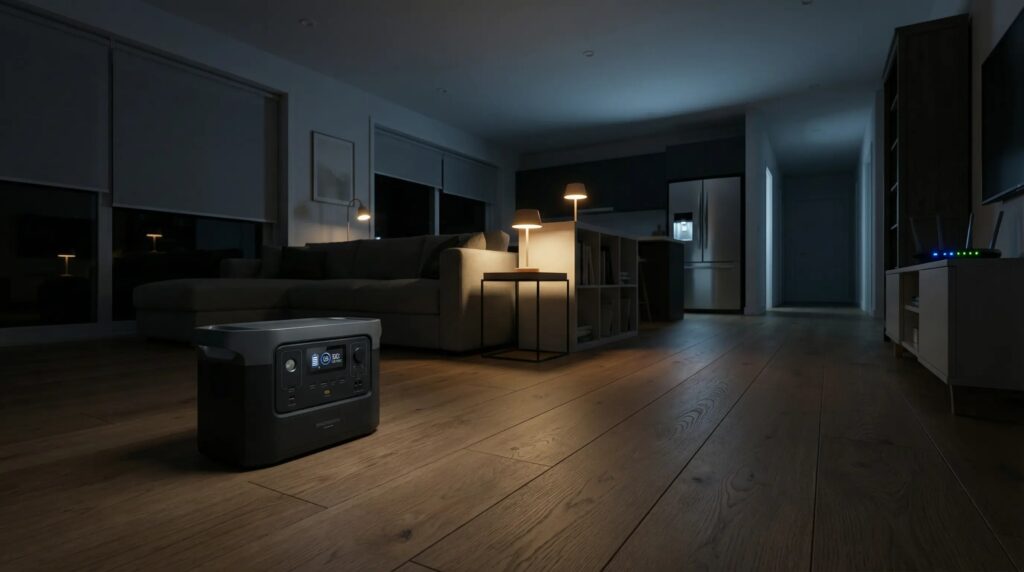
Home power outage watts explained clearly. Learn how many watts your home needs during a power outage and how to calculate backup power accurately.
Power outages can disrupt daily life in seconds, leaving homes without lighting, heating, refrigeration, or internet access. One of the most common questions homeowners ask is: how many watts does a home actually need during a power outage?
The answer depends on what you want to power, how long the outage lasts, and whether your goal is basic survival or near-normal comfort. In this guide, we break down home power needs clearly and realistically, helping you calculate the exact wattage required for your household during an outage—without guesswork or overspending.
Why Knowing Your Wattage Needs Matters During an Outage
Understanding home power outage watts allows homeowners to plan backup power realistically instead of relying on guesses.
Knowing how many watts your home needs during a power outage is essential for making the right backup power decision. Without accurate wattage calculations, many homeowners end up with systems that fail to run critical appliances or shut down unexpectedly due to overload.
Understanding your wattage needs helps you avoid three common problems: buying underpowered equipment, overspending on unnecessary capacity, and shortening the runtime of your backup system. It also allows you to prioritize essential devices, ensuring that refrigeration, communication, lighting, and safety systems remain operational when the grid goes down.
Most importantly, calculating wattage in advance removes guesswork during emergencies. Instead of relying on estimates or marketing claims, you can confidently choose a backup power solution that matches your real household requirements and performs reliably when it matters most.
Essential Home Appliances and Their Power Consumption
According to the U.S. Department of Energy, understanding appliance wattage is essential when planning backup power during outages.
During a power outage, most households do not need to run every appliance at once. The key is to focus on essential devices that protect food, ensure basic comfort, maintain communication, and support safety. Knowing the average power consumption of common home appliances makes it much easier to plan an effective backup power setup.
Common Household Appliances and Average Wattage
| Appliance | Average Running Watts |
|---|---|
| Refrigerator | 150–800 W |
| Freezer | 150–700 W |
| LED Light (per bulb) | 10–15 W |
| Wi-Fi Router | 10–20 W |
| Laptop | 50–100 W |
| Television | 100–200 W |
| Microwave | 800–1200 W |
| Coffee Maker | 600–1000 W |
| Space Heater | 1500 W |
| Window Air Conditioner | 1000–1500 W |
| Sump Pump | 750–1500 W |
Some appliances, especially refrigerators, pumps, and air conditioners, require higher starting watts when they first turn on. Backup power systems should always account for these startup surges to prevent system overload or unexpected shutdowns.
Basic vs. Comfortable vs. Full-Home Power Needs
Not all homes need the same level of backup power during an outage. Power requirements vary depending on whether your goal is basic survival, maintaining daily comfort, or keeping your entire home running as usual. Understanding these three levels helps you avoid overestimating or underestimating your actual power needs.
Basic Emergency Power (Essential Only)
This level focuses on keeping only the most critical devices running during a power outage. It is designed for short outages or emergency situations where safety and food preservation are the main priorities. Typical devices include a refrigerator, a few LED lights, a Wi-Fi router, phone chargers, and possibly a laptop.
Estimated total power needed: 500–1,000 watts
Comfortable Living Power
Comfort-level backup power allows households to maintain normal daily activities during an outage. In addition to essential devices, this setup can support remote work, entertainment, and limited cooking. Common devices include refrigeration, lighting, internet equipment, laptops, televisions, and occasional microwave or coffee maker use.
Estimated total power needed: 2,000–3,000 watts
Full-Home Backup Power
Full-home backup systems aim to replicate normal household electricity usage during an outage. This level supports large appliances, heating or cooling systems, water pumps, and multiple rooms operating simultaneously. These setups require careful planning and significantly higher-capacity systems, such as whole-home generators or advanced solar battery solutions.
Estimated total power needed: 5,000–10,000+ watts
How to Calculate Your Home’s Exact Power Needs
Calculating home power outage watts helps you avoid oversizing or undersizing your backup power system. Calculating your home’s exact power needs during a power outage does not require technical expertise. By following a simple step-by-step method, you can determine the wattage your household truly needs and avoid relying on rough estimates or sales-driven recommendations.
Step 1: List the Devices You Want to Power
Start by writing down only the devices you consider essential during an outage. This usually includes appliances related to food preservation, communication, lighting, work, and safety. Avoid adding devices you can comfortably live without during an emergency.
Step 2: Check the Running Wattage of Each Device
Every electrical device has a rated power consumption, usually listed on a label or in the product manual. Use the running watts, not the maximum rating, for your base calculation. If the exact number is unavailable, use average wattage estimates from reliable sources or manufacturer specifications.
Step 3: Account for Starting Watts (Surge Power)
Some appliances require extra power when they start. Refrigerators, pumps, air conditioners, and compressors can draw two to three times their running wattage for a few seconds. Your backup power system must be able to handle this surge to prevent shutdowns or system damage.
Step 4: Add Up Total Wattage
Once you have the running wattage for each device, add them together to get your total power requirement. Then ensure your backup system has enough surge capacity to handle startup loads comfortably.
Step 5: Consider Runtime, Not Just Watts
Wattage alone does not determine how long your backup power will last. Battery capacity, fuel availability, and charging methods all affect runtime. A lower-watt setup running for many hours may require more energy storage than a high-watt setup used briefly.
If your essential devices total 1,200 watts and your refrigerator requires a 2,000-watt startup surge, your backup power system should support at least 2,000–2,500 watts of surge capacity to operate safely and reliably.
Choosing the Right Backup Power Solution Based on Wattage
Once you know how many watts your home needs during a power outage, choosing the right backup power solution becomes much clearer. The key is matching your calculated wattage to a system that can handle both your running load and startup surges without unnecessary overspending.
Low Wattage Needs (Up to 1,000 Watts)
Homes with basic emergency power needs typically fall into this range. Portable power stations and small UPS systems are often sufficient for running essential devices like lighting, internet equipment, laptops, and phone chargers. These solutions are quiet, easy to use indoors, and require minimal maintenance.
Medium Wattage Needs (2,000–3,000 Watts)
Households that want to maintain comfort during outages usually require mid-range systems. Larger portable power stations, dual-battery setups, or small inverter generators can handle refrigerators, microwaves, TVs, and remote work equipment. This range offers flexibility without the complexity of full-home systems.
High Wattage Needs (5,000 Watts and Above)
For homes that need to power heating, cooling, pumps, or multiple large appliances simultaneously, high-capacity solutions are necessary. Whole-home generators and advanced solar backup systems with battery storage are best suited for these requirements. These systems require proper installation and planning but provide the most comprehensive coverage during long outages.
Choosing a backup power solution that closely matches your wattage needs helps maximize efficiency, runtime, and long-term reliability. Oversized systems often increase costs without real benefits, while undersized systems may fail during critical moments.
Common Mistakes When Estimating Power Needs
Many homeowners underestimate or overestimate their power needs during an outage, leading to poor backup power decisions. Understanding the most common mistakes can help you avoid unnecessary costs, system failures, and frustration when power interruptions occur.
Ignoring Starting Wattage Surges
One of the most common mistakes is focusing only on running watts while ignoring startup surges. Appliances with motors or compressors require extra power when they start, and failing to account for this can overload your backup system instantly.
Assuming All Appliances Run at the Same Time
Not every device needs to operate simultaneously during an outage. Many households overestimate their power needs by assuming constant usage of all appliances. Prioritizing essential devices helps reduce required capacity and lowers overall system cost.
Choosing Systems Based on Marketing Claims
Manufacturers often highlight peak power ratings that sound impressive but may only be available for a few seconds. Relying on peak wattage alone can result in systems that fail to deliver consistent performance during extended outages.
Overlooking Runtime and Energy Storage
Power capacity alone does not guarantee long-lasting backup. Batteries, fuel availability, and recharge options determine how long your system can operate. A well-balanced system considers both wattage and runtime needs.
Final Thoughts: Planning the Right Backup Power Capacity
Once you calculate home power outage watts accurately, choosing the right generator or battery system becomes much easier.
Planning the right backup power capacity for your home is not about choosing the biggest or most expensive system available. It is about understanding your real energy needs, prioritizing essential appliances, and selecting a solution that performs reliably during outages without unnecessary complexity.
By calculating your home’s wattage accurately, you gain full control over your backup power strategy. This allows you to avoid common mistakes, manage costs wisely, and ensure that critical devices remain operational when the grid fails.
Whether your goal is basic emergency coverage or full-home power continuity, informed planning is the key to long-term reliability. A well-matched backup power system provides peace of mind, protects your household, and ensures you are prepared for future power disruptions with confidence.
Frequently Asked Questions
How many watts does a typical home need during a power outage?
Most homes need about 1,000–3,000 watts to cover essential devices, depending on what runs at the same time.
Can a portable power station run a refrigerator during an outage?
Yes, if it supports the refrigerator’s running watts and starting surge (often 1,000W+ surge capability).